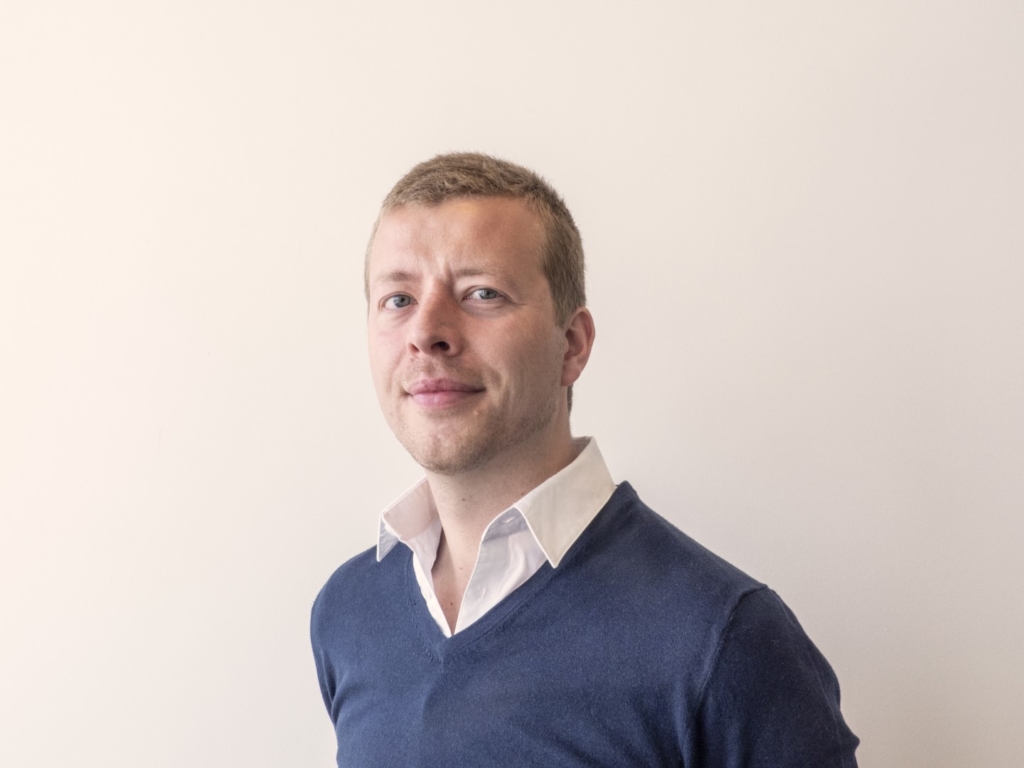
Simon Claeys is a partner at B2Ai Brussels. His professional life has always been based in the capital, but he has also worked internationally with professional forays into Congo and Central Africa, Sudan and the Arab region.

Sustainability – B2Ai in a pioneering role
Over years of experience Simon has learned that building in the capital calls for a particular kind of expertise, definitely involving a taste for complexity and sustainability, plus a solid network. He wants to build on these factors.
As a member of the management committee of ecobuild.brussels, the sectoral network for sustainable building and renovation, Simon has helped to outline an environmentally progressive building policy for the Brussels region. “Working within the cluster, we drafted papers that formed the basis of the legislation promoting a circular economy,” Simon says. “We also created a network where all the stakeholders – contractors, developers, government agencies, universities, architects – were brought together to work on that form of sustainable construction.” As a Partner of B2Ai, Simon Claeys wants to maintain and further leverage his impressive network. He therefore feels that continuing education is very important. “Not just for me, but for everyone in the practice. B2Ai can stand among the pioneers of sustainability. The petition that we signed, alongside other architects, to promote sustainable building is not just a gesture – it’s a commitment.” The fact that some Brussels developers have already made a big turnaround is good news for Simon. “And that approach by lawmakers and players is also being noticed beyond Brussels.”
Expertise in preserving and reusing buildings
“The approach in Brussels is completely different from that in Flanders. The legislation, the way of working and networking, the politics … everything is different there,” says Simon. “The fact that in recent years Brussels has determinedly opted to go down the route of preserving and reusing buildings in its sustainability policy has brought about some exemplary projects.” Ideas in abundance, Simon says, but the system in Brussels is so complex that you have to be patient. “Foodmarket ‘Wolf’ is an excellent example of reusing old buildings, but it took years before it finally opened its doors, just recently. Sustainability is not synonymous with reuse,” Simon clarifies. “Sometimes it is more sustainable to choose a blank slate; the optimal situation can also combine approaches.”
Circular economy using CLT
Gare Maritime is an obvious but brilliant example of the circular economy, Simon says: “Those sheds were completely derelict, but tearing them down would have been outrageous. What is happening now is something completely separate, completely circular. The structures erected in that space can be completely removed and, in theory, you could even restore trains to the site. Cabins in CLT (Cross Laminated Timber) will be set up to provide a mix of functions: coworking spaces, permanent offices, small-scale retail, a food market, an indoor park, and so on. There will be a huge landscaped area. That’s pretty much by the book of what’s possible.”
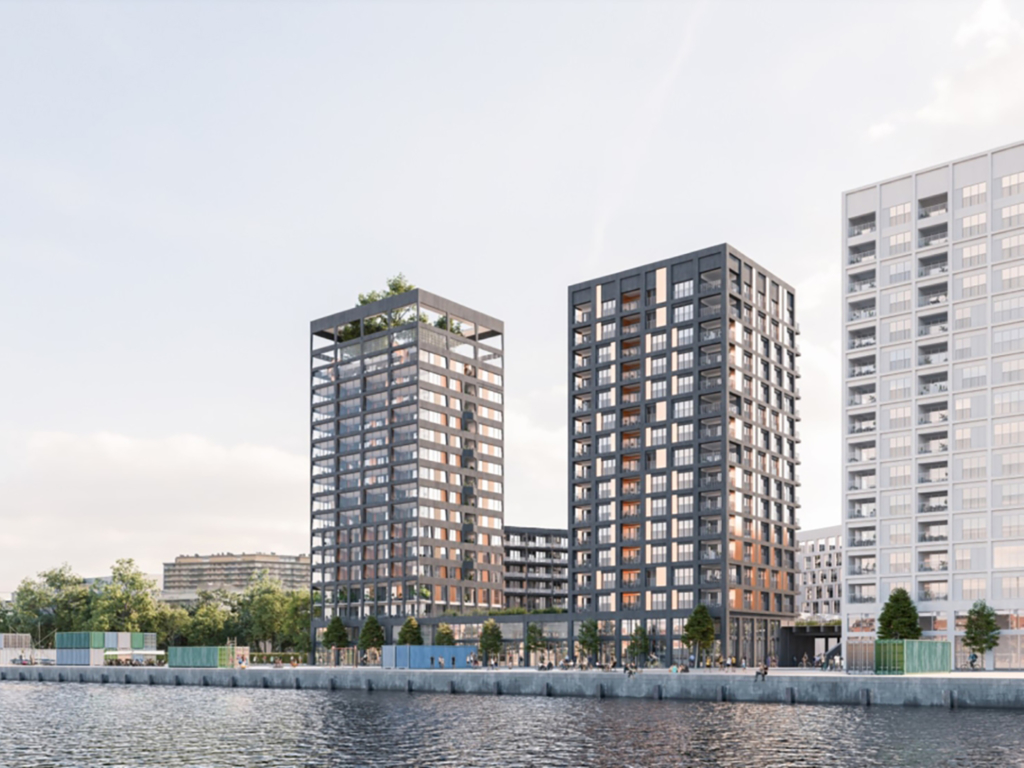
“Exemplary projects like ‘Urbanities’ were a reason why I became a partner at B2Ai. It showcases what B2Ai is all about: innovative, architecturally worthwhile, respectful of the environment and its inhabitants, emblematic of Brussels.”
Yet much is still in its infancy. “Meccano-style” disassembly for reuse is a pipe dream for the moment. Simon can attest to this from his own experience, as he was responsible for the largest CLT project in Brussels, a student housing project. “Circular economy doesn’t mean going 100% for reuse, either. There will always be a need for new assets that will feed circular projects, otherwise within five years you will already be stuck with having windows available which no longer perform well. For Brussels, I see a cross-pollination between circular economy and many other systems, including pure new construction, whether or not following demolition.”
…and a functional mix
Permit applications for single-purpose buildings are becoming less and less prevalent in favour of a mix of residential, commercial and leisure functions within neighbourhoods and buildings and among occupants. ‘Urbanities’, a B2Ai creation, is a telling example. “Urbanities is a very interesting project,” says Simon. An entirely new neighbourhood is being created, with a function mix that you would never put together at first glance. The project demonstrates B2Ai’s approach: innovative, of architectural value, respectful of the environment and its inhabitants, emblematic of Brussels. Brussels developers are looking at it in awe, and the collaboration between the region, the municipality, the project owner and B2Ai is exemplary.”