Barbara Wolff was born in Cologne, but has lived in Belgium for fifteen years. She studied architecture at the Bauhaus-Universität Weimar, at the Technische Universität Berlin and at the Ecole de Belleville in Paris.
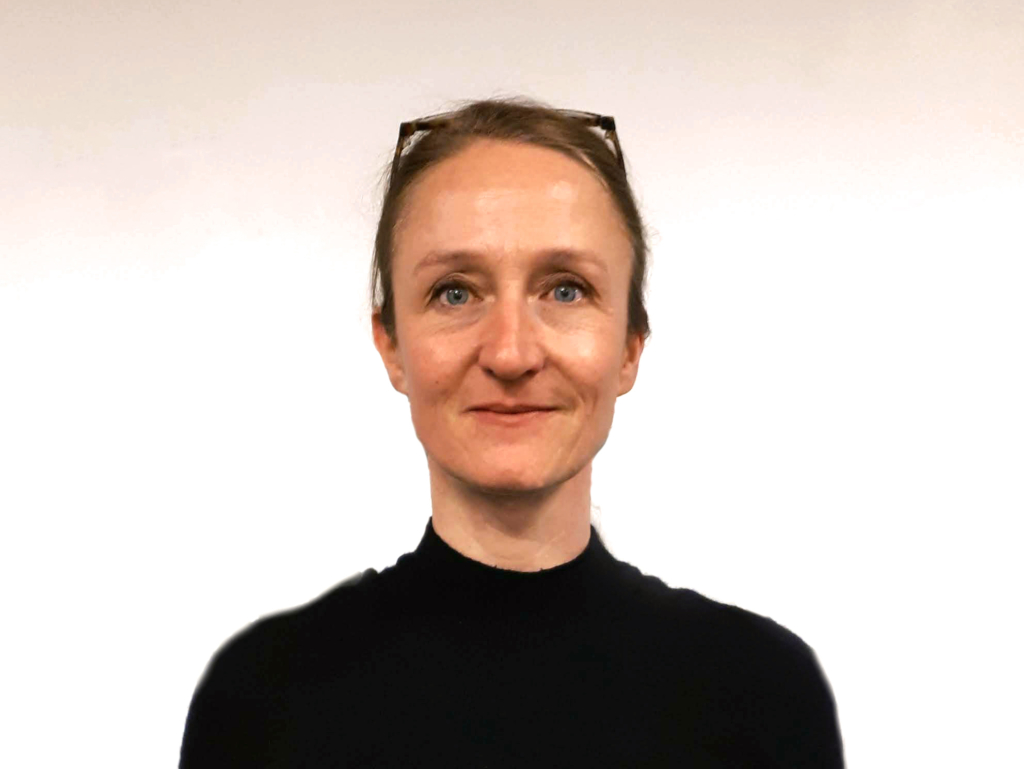
Highly qualified with extensive international experience.
Her career took off at OMA, Rem Koolhaas’s Dutch firm, where she worked on projects in Portugal and Germany. After that Barbara taught at the RWTH in Aachen, acted as architect for two villas in Capetown (South Africa) and from Copenhagen set up a Brussels office for JDS Architects. Before finally joining B2Ai, she was also a partner at Synergy International. And these are just the broad outlines of her international career.
A conversation with Barbara Wolff, our international expert and one of our seven partners.
A deep interest in language, culture and architecture.
“The position of international expert is new at B2Ai,” Barbara clarifies. “And I was attracted by the international aspect and by that newness.” The main reason she attracted B2Ai was undoubtedly her extensive international experience, both as an architect and as a teacher and project manager. “Living and working in different countries and environments has, from professional necessity, but also through personal interest, sharpened my awareness of cultural differences and similarities. And my feel for languages. I speak fluent German, Dutch, English and French and a bit of Italian. I can put both skills to good use in my job at B2Ai.”
At B2Ai, Barbara applies her impressive international experience in prospecting, competitions and tenders abroad. Unsurprisingly, she primarily deals with Germany, but she also applies her dynamic approach in other countries including France, the Netherlands and Poland.
The strengths of both a large and a small practice.
B2Ai stands out from other practices in two crucial ways. “We have a distinct advantage in being a large practice, with the well-oiled structure that goes with it. But as a B2Ai client, you deal with a single contact who handles your project in a highly personalised way. Just like a small practice, in fact” says Barbara, adding: “Our large scale offers our customers another important benefit: we have the skills in-house to finish the entire project, no matter how big or small, flawlessly. Alongside our team of architects we also have staff specialising in stability, technologies, interior design, urban planning and BIM. Our people are at home in all markets and look at your project from all those angles as a whole. And of course that appeals to foreign clients as well.”
Examples that speak beyond our borders.
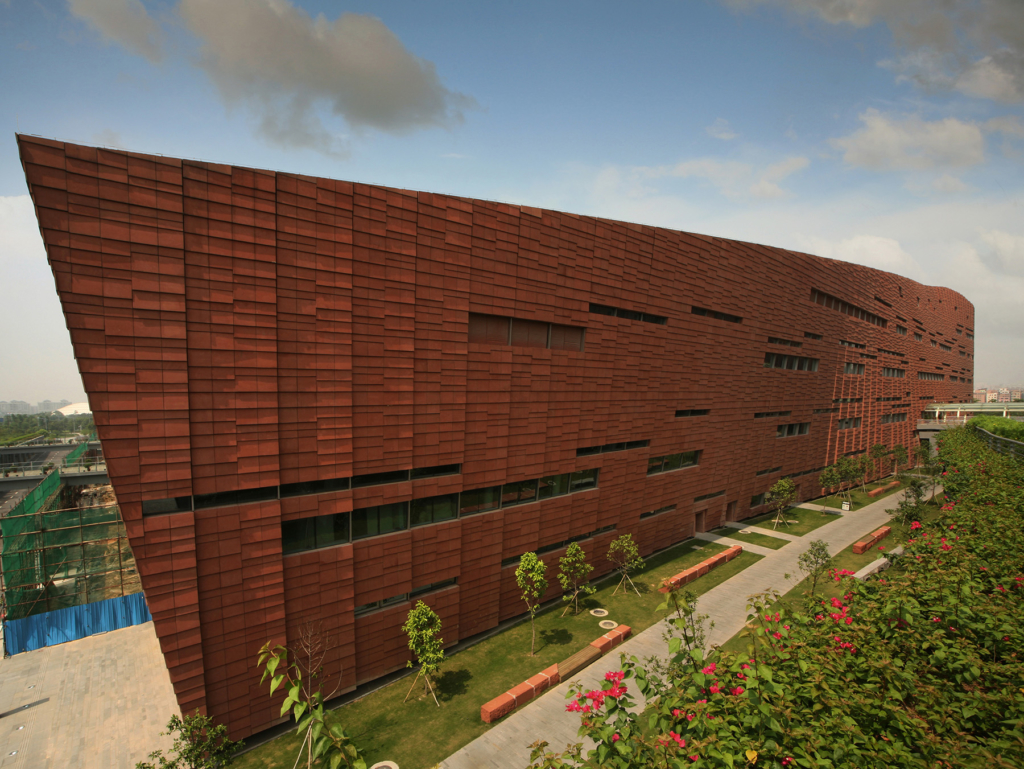
“Projects that allow us to excel at home and abroad? The ones I leave out shouldn’t take it badly,” Barbara laughs. “I’ll mention three in passing: AZ Zeno in Knokke, the NATO buildings in Mons and the prison at Haren. They prove that B2Ai can tackle high-quality projects with completely different purposes and architecture, but all with a clear social impact.”
An environmental approach inspired by Europe.
The most important architectural developments in the near future and beyond will be in environmental aspects: our CO2 emissions must go down.
Today’s architects must increasingly take account of the impact of their work in terms of energy consumption, insulation and, above all, the reuse of buildings and materials.
“The EU plays an important role here,” Barbara explains. “Work is well under way in the European institutions to create a kind of European Bauhaus. The intention is to scrutinise cultural and technical aspects and support them with, for instance, greater attention to ‘soft’ mobility and reduced use of natural resources. The COVID issue has given a striking boost to our appreciation of how much we are dependent on nature. And that is not just a very positive development, but also an exciting challenge for everyone, including architects,” Barbara concludes.